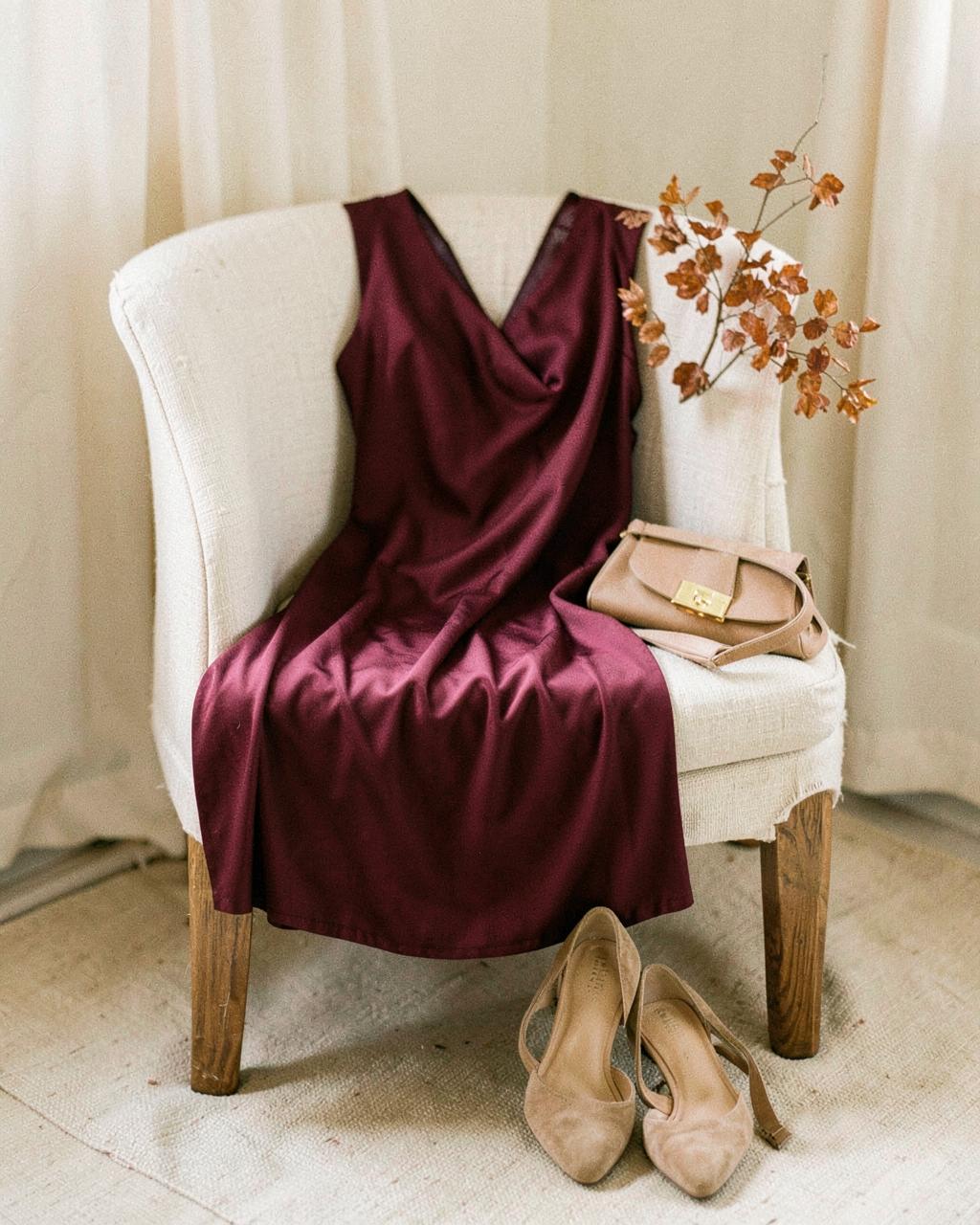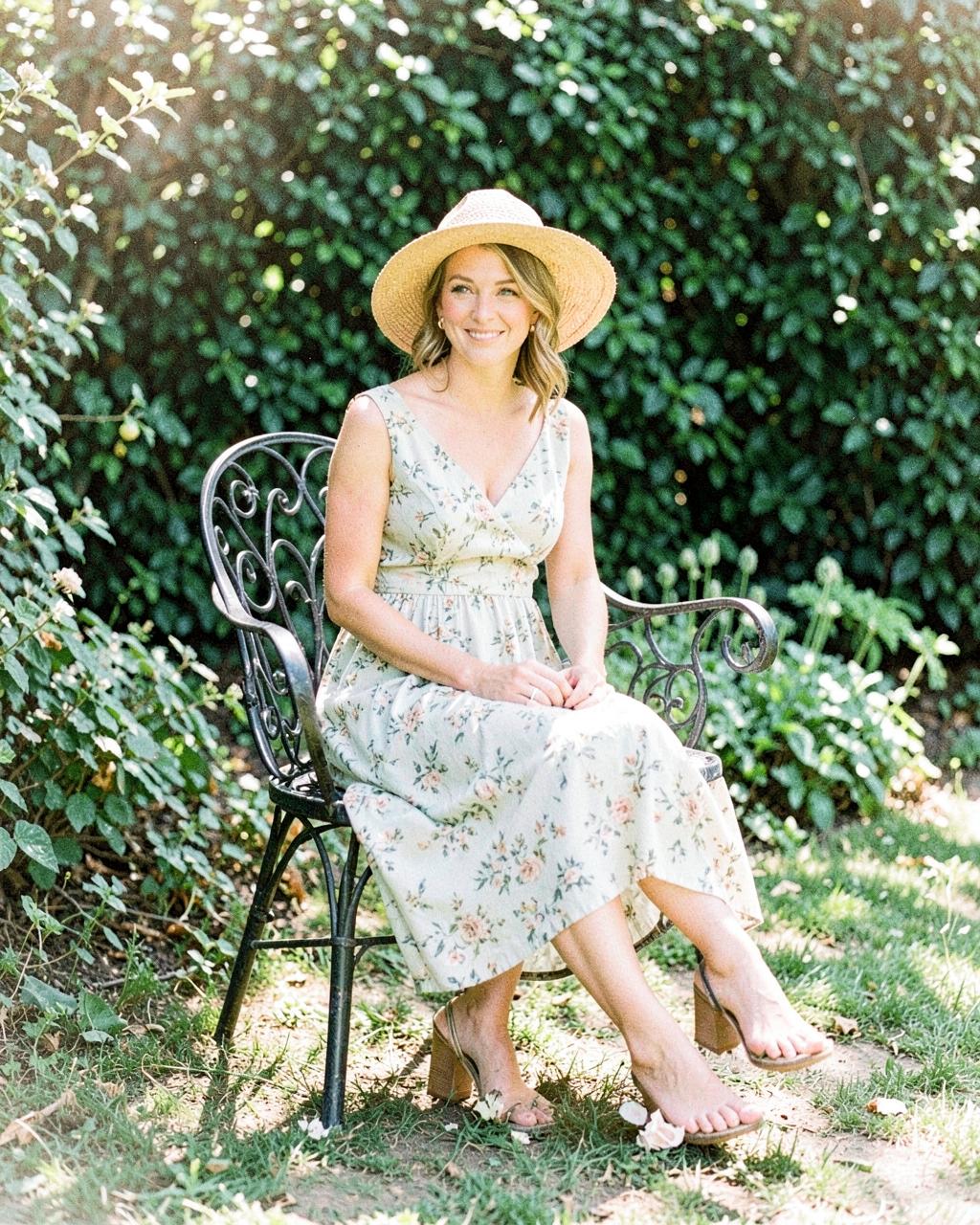
A garden wedding is an outdoor event with formal expectations. That's the whole brief. The dress needs to look considered in photographs and survive a lawn, a breeze and a long afternoon in daylight.
Read the setting, not just the dress code
Most garden weddings sit somewhere between semi-formal and cocktail. The invitation still governs, but the venue tells you how to interpret it.
- Private garden or family home — softer, less formal, more print.
- Estate or botanical garden — cocktail, slightly more polish.
- Marquee on a lawn — dressier, and often colder later than a house wedding.
- Vineyard or orchard — cocktail with practical shoes; the ground is rarely flat.
The dress
- Midi is the natural length. It clears the grass and reads correct in daylight.
- Prints work. Florals, small geometrics and watercolour prints suit gardens better than they suit ballrooms.
- Choose fabric with a little body. Very fine chiffon and slippery satin are difficult in wind.
- Watch the lining. Pale, unlined fabrics turn translucent in strong sunlight, which you won't notice indoors.
- Sleeves, straps or a covered shoulder buy you sun protection and warmth later.
Shoes: the decision that matters most
A stiletto sinks into grass. That's not a style opinion — it's physics, and it will define your evening.
- Block heel — the default. Height without the sinking.
- Wedge — the most stable option on soft ground.
- Elegant flat or pointed slingback — perfectly correct at a daytime garden wedding.
- Heel protectors — small clear caps that fit over a slim heel. If you're set on a stiletto, buy them.
- A second pair in the car — for the walk in, the walk out, or the last hour.
Terrain and weather planning
Before you leave the house
- Check the forecast for the ceremony hour and the two hours after sunset — they're often very different.
- Confirm whether the ceremony, drinks and dinner are in different parts of the grounds.
- Consider gravel drives, stepping stones and slopes, not just the lawn.
- Plan for sun: shade may be limited during a midday ceremony.
- Pack a layer for after sunset, even in high summer. Open ground cools quickly.
- Take a compact umbrella if rain is even a possibility. Nobody regrets it.
Sun, hair and makeup
- Sunscreen under makeup, and a long-wear base if the ceremony is in full sun.
- Hair that survives wind — a low bun, a half-up style or a braid holds better than loose waves outdoors.
- A hat or fascinator is welcome at many garden weddings and genuinely useful. Check whether it blocks anyone's view during the ceremony.
- Insect repellent if the venue is near water or woodland. Apply before you dress.
Daytime vs evening at the same wedding
Most garden weddings start in daylight and end after dark. The best guest outfits are one look with one change of layer.
| Ceremony (daylight) | Reception (after dark) | |
|---|---|---|
| Layer | None, or a light shrug | Blazer, knit wrap or cropped jacket |
| Shoes | Block heel or flat on grass | Same shoe, or a comfortable swap |
| Bag | Small crossbody for hands-free drinks | Same bag |
| Jewellery | Simple in bright daylight | Add an earring if the light drops |
What to avoid
- Stilettos on unprotected grass.
- Unlined pale fabrics in strong sun.
- Anything strapless you'll be adjusting all afternoon in wind.
- White or ivory, unless the couple has said otherwise.
- A dress you can't sit down on a garden chair in comfortably.
If the wedding is in autumn, the layering guidance in the fall wedding guest guide applies directly. For a formal garden or marquee wedding, read the black tie guide as well.