Most extension confusion comes from comparing things that aren't comparable. A clip-in is a product you put in yourself in five minutes. A hand-tied install is a salon service maintained on a schedule. Both are called extensions; they're barely the same category.
Here's what each method involves, and how to work out which one suits your hair and your life.
The main types
Clip-ins
Wefts with small pressure clips that you attach and remove yourself. Nothing is bonded to your hair.
- Commitment: none. In and out the same day.
- Best for: occasional length or volume, events, travel, anyone testing extensions for the first time.
- Consider: they need to be styled and blended, and very fine hair can struggle to conceal the clips without some technique.
Wefts (sewn-in / beaded weft)
A continuous strip of hair attached to a row of small beads or a braid, installed by a stylist.
- Commitment: worn continuously, with maintenance appointments typically every six to ten weeks.
- Best for: significant volume and length, and hair strong enough to carry the row.
- Consider: more expensive up front, and the row needs to sit where your own hair can cover it.
Hand-tied wefts
A finer, flatter weft made by hand rather than machine. The same install principle as a weft, with a thinner, less detectable row.
- Commitment: salon-maintained, on a regular cycle.
- Best for: a very seamless result, especially with finer hair or when you wear your hair up.
- Consider: usually the most expensive method, and it takes longer to install because more rows are needed for the same density.
Keratin tip (K-tip / fusion)
Individual small strands bonded to your own hair with a keratin tip, applied one at a time.
- Commitment: typically several months per install, then removal and reapplication by a stylist.
- Best for: natural movement, ponytails and updos, and adding density in specific areas.
- Consider: a long appointment, and removal must be done professionally.
Tape-ins
- Commitment: usually six to eight weeks between adjustments.
- Best for: a quick, flat install and a mid-range budget.
- Consider: certain oils and conditioners can affect the adhesive; your stylist will tell you which to avoid.
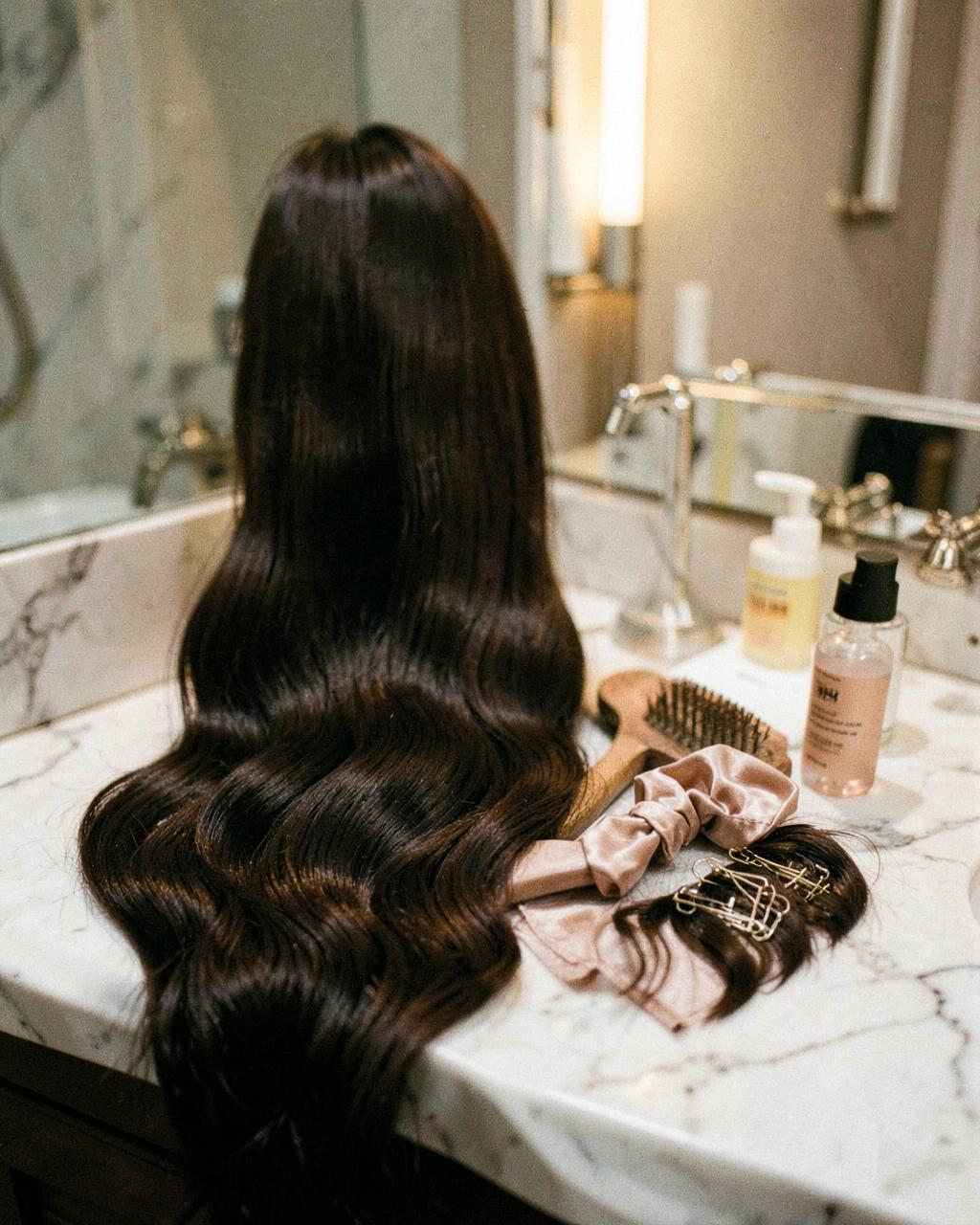
Wigs and toppers
- Commitment: none to your own hair.
- Best for: full coverage, dramatic changes, protective styling, or anyone who wants a different look without any attachment method.
- Consider: cap construction and lace quality make the biggest difference to how natural it looks.
| Method | Applied by | Typical wear | Suits |
|---|---|---|---|
| Clip-ins | You | Hours at a time | Occasional length and volume |
| Wefts | Stylist | Continuous, maintained | Volume and length, stronger hair |
| Hand-tied | Stylist | Continuous, maintained | Seamless finish, finer hair |
| Keratin tips | Stylist | Months per install | Movement, ponytails, targeted density |
| Tape-ins | Stylist | 6–8 weeks per cycle | Flat install, mid budget |
| Wigs / toppers | You | As worn | Full coverage, no attachment |
How to choose
Start with what you want
- Length only — clip-ins or a small number of wefts are often enough.
- Volume only — a shorter row, or a topper if the concern is at the crown.
- Both — a full weft or hand-tied install.
- Occasional — clip-ins, without question.
Then be honest about maintenance
Permanent methods are a standing commitment: appointments every six to ten weeks, a specific washing routine, and products your stylist recommends. If that schedule doesn't fit your life, clip-ins will make you far happier than a beautiful install you can't maintain.
Lifestyle
- Swimming, hot yoga and daily washing all affect longevity — mention them at consultation.
- If you wear your hair up most days, discuss placement carefully. Some methods conceal better in updos than others.
- Sleeping in a braid and a silk pillowcase extends the life of almost any method.
Installation
- Everything except clip-ins and wigs needs a professional.
- Ask to see the stylist's work on hair similar to yours in colour and texture.
- Ask what removal costs and involves, before you book the install.
Colour matching
- Match to your ends, not your roots — that's where the extension sits.
- Two tones blended usually looks more natural than one flat shade.
- Check the match in daylight, not under salon lighting.
- Human hair can be toned and adjusted by a colourist; most synthetic hair cannot.
Budget
Price varies enormously by market, hair quality and stylist. Budget for three things, not one: the hair, the installation, and the maintenance over a year. The maintenance is the part people underestimate.
Questions to ask at a consultation
- Which method do you recommend for my hair density and texture, and why?
- How many rows or grams are you suggesting?
- What's the maintenance schedule and cost?
- What does removal involve?
- Which products should I avoid?
- How long should this hair last with proper care?
- Can I see photographs of your work on similar hair?
Caring for them
- Use a sulphate-free shampoo and keep conditioner away from the attachment points unless told otherwise.
- Brush with a loop or extension brush, holding the hair at the root to reduce tension.
- Use heat protection, and lower heat than you'd use on your own hair.
- Braid loosely before bed and sleep on silk.
- Rinse after chlorine or salt water, and use a leave-in conditioner.
If you're going to a wedding or an event, extensions want a trial run first — the fall wedding guest guide covers the rest of that look.